Bridging Divides Through Personal Storytelling
A grant-funded listening project about the stories we tell, the stories we assume, and what can happen when people are invited to hear one another more fully.
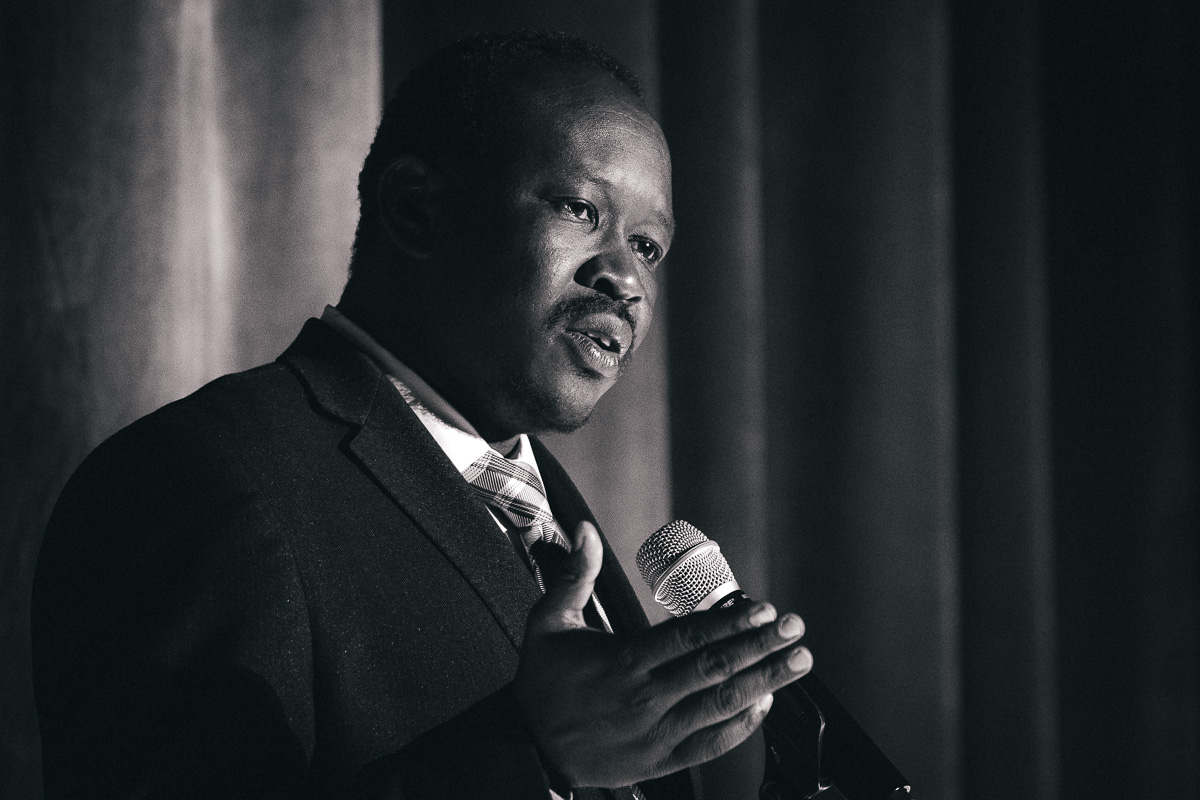

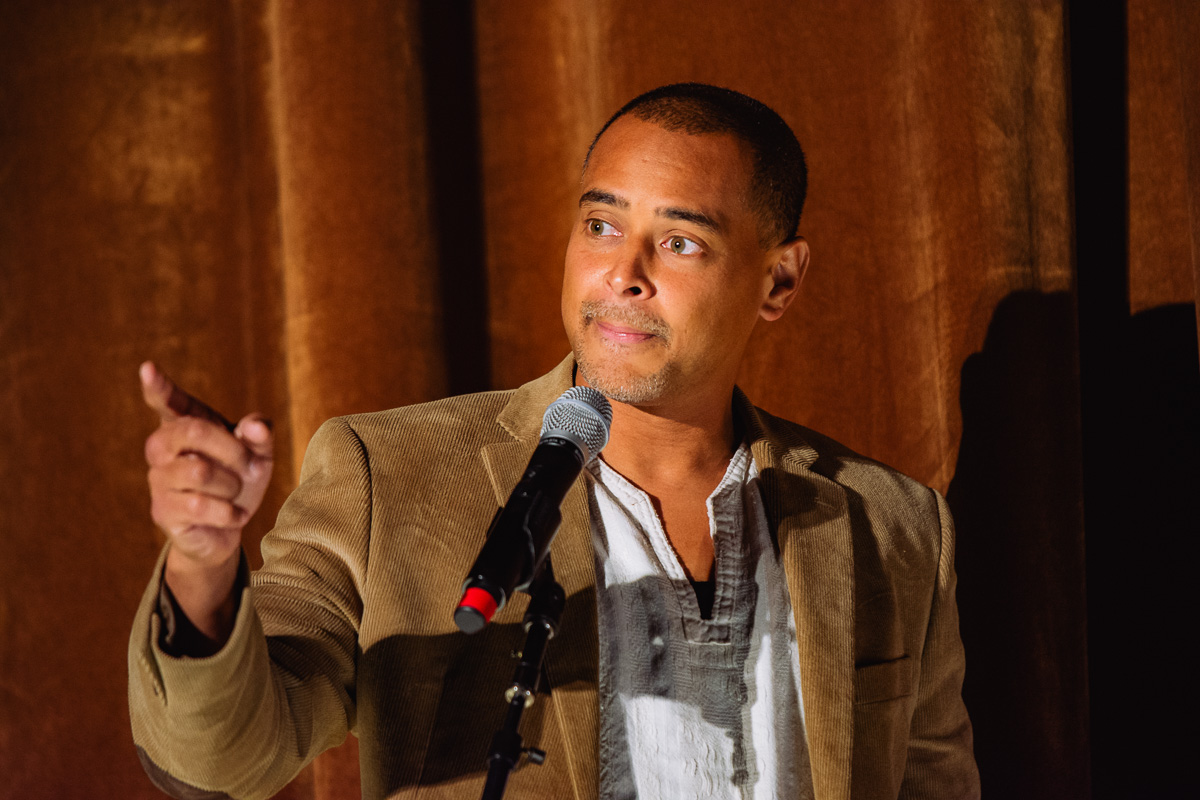

About the project
In 2018, Bridging Divides Through Personal Storytelling received support through the Johns Hopkins Idea Lab’s Ten by Twenty Challenge, a university initiative that, in 2018, invited ideas for bridging divides.
The project brought two listening-centered storytelling experiences to Johns Hopkins: a live Stoop Storytelling show about mix-ups, mistakes, and misunderstandings, and a StoryCorps One Small Step recording event where people with different political views sat down, one-to-one, to talk about the lives and experiences behind their beliefs.
At the heart of the project was a simple belief: when we share and really listen to each other’s stories, we remember how vast a universe each person is. We are each more than our ideologies, political opinions, labels, and assumptions.
Live storytelling
A public evening of true stories told live with The Stoop Storytelling Series in Baltimore.
Recorded conversations
Five StoryCorps One Small Step conversations between people with different political views.
A larger question
How do the stories we tell about ourselves—and about each other—shape whether we divide or connect?
Why stories?
I began this project with a hopeful idea: that stories could help people remember one another’s humanity across difference. I still believe that. But the project also complicated the idea in useful ways. Stories are not automatically bridges. They can also become walls. We tell stories about who we are, who other people are, what happened, who was right, who was wrong, and what kind of world we are living in. Those stories can connect us, protect us, distort us, or divide us.
What felt most meaningful about this grant was the chance to hear people thinking out loud through their own experiences. The Stoop stories explored mix-ups, mistakes, harm, identity, embarrassment, regret, and repair. The StoryCorps conversations asked people with different political views to set debate aside and talk about the lives that shaped them. Together, the two events became a kind of listening laboratory: one part public storytelling, one part private conversation, and one part invitation to notice how much more there is to a person than the story we may have already written about them.
Stories can bridge divides.
When someone tells the story behind a belief, the belief becomes less abstract. We begin to hear a person, not just a position.
Stories can create divides.
The stories we tell about “people like that” can become shortcuts for judgment, fear, or dismissal.
Stories can change the listener.
Hearing someone speak in their own voice asks more of us than reading a label. It invites attention, humility, and sometimes surprise.
Getting it Wrong: Stories about Mix-ups, Mistakes, and Misunderstandings
Enjoy these recorded stories from an evening of epic and goofy tales about how we misjudge, misconstrue, and misinterpret ourselves, each other, and the world.
This live show was presented in partnership with The Stoop Storytelling Series: true stories told live in Baltimore. The event was funded by the Johns Hopkins Idea Lab.
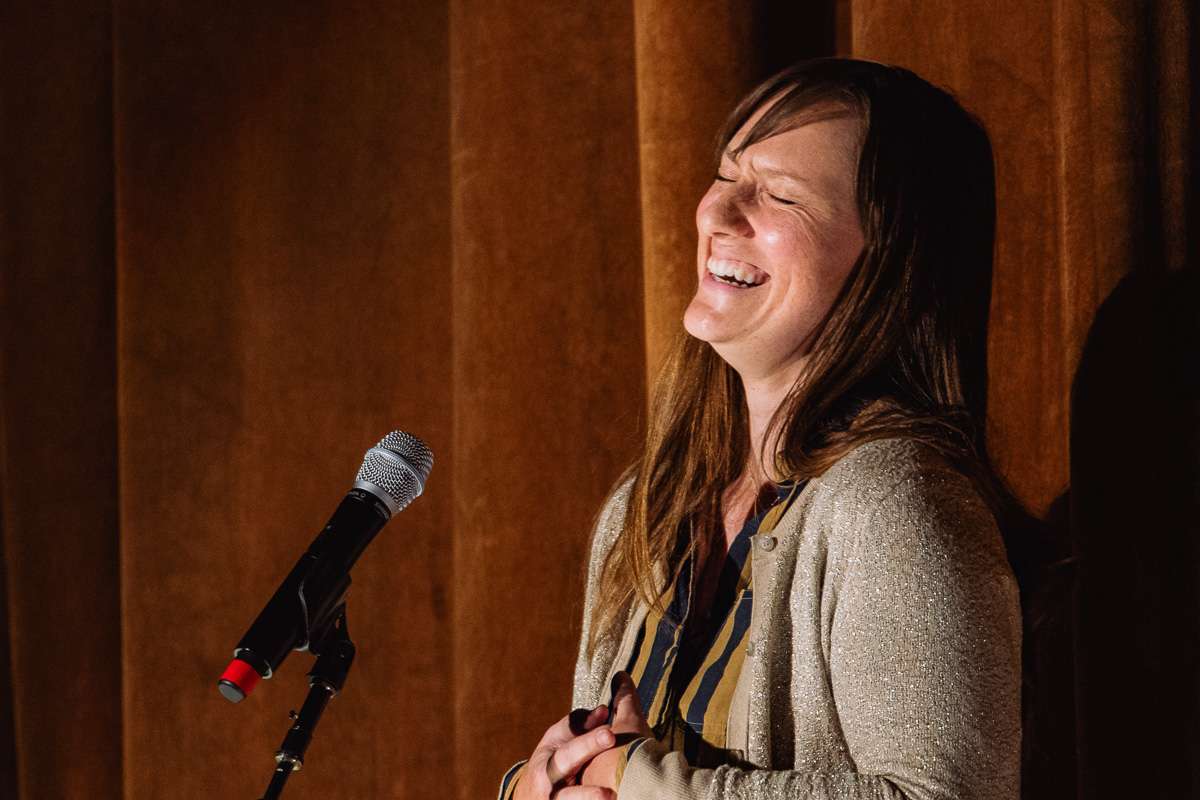
Alice Strum
Read transcript
So this story might be a little less inspirational than Jacob's, but it's OK to laugh also. You'll understand why I say that in a moment.
When I was a sophomore in college, my father got really sick. After a few weeks in the hospital with all the doctors and family trying to figure out what to do, we made the decision to take him home to his house on hospice just so they could make whatever time was left as comfortable as possible. We brought him home there. He lived in this little house on the Chesapeake Bay, right on top of one of the Calvert Cliffs. I basically spent my time reading that.
This little book the hospice nurse had given us called "Signs and Symptoms of Death". It has all these categories, like: – months to years – weeks to months – days to weeks I don't know why this was important to me, but I just really wanted to know where we were. On the day in question, I'm reading through my checklist. This morning I was feeling really days to weeks, but some of this stuff is straight-up hours to days. I get a phone call and I answer, and it's a woman speaking to me in informal Arabic. I should say, at this point I had been studying formal Arabic for three and a half semesters, so I was not fluent. She says, "We are on the way." I'm kind of scrambling in either language, like, "What do I say here?" I manage to stammer out, "My father is sick." I say, looking at "Mr. Hours to Weeks" over here. She says a bunch of stuff I don't understand, and then she's like, "See you in 30 minutes." I hang up the phone. Everybody is looking at me, obviously super confused, because I was having this conversation in Arabic.
And my mother's like, "Who was that?" and I was like "Kautar," and she was like, "Who?" because it was my father's brother, my uncle, who is married to a French lady, my aunt by marriage. Her nephew is married to this Moroccan lady, and so that couple had come over to our house when they moved to DC about a year before this story. We had a barbecue, and it was fine.
You know, my mother spoke like elementary school French, and I spoke less than elementary school Arabic. They hadn't really learned English yet, but we kind of talked a little, and we were like, "We'll do it again sometime," and sometime had come.
My father's hospital bed was right in the living room, right inside the front door of the house, so I'm kind of listening for them, looking through my Arabic book, preparing, and unless I hear their car crunching on the driveway, I rush out there. It's the couple that I met and their kids and these two old ladies who said they were family friends from Morocco who just got to the US for the first time. This was their first day, so I was like, "Marhaban, welcome." Indoors is not appropriate for children, so they were confused, but they left their kids with the old ladies and they came inside. Obviously they were beyond horrified when they got inside. We were shocked, but they were even more shocked, so it was awkward, obviously.
After a few minutes, my mother in French is like, "Why don't you guys go have a picnic outside and look for shark's teeth." We didn't really know how to say "shark's teeth," so I managed to be like, "Old fish teeth," and they're like, "Ah," but they leave, they get the hint.
We're trying to figure out, I don't know, apparently maybe he can hear, so we're like playing songs he likes, Wagner and Roy Orbison, I don't know. I'm looking at my list, and he dies, so you know, we take that on board, and we're trying to figure out, what do you do next? Obviously, in a larger way, I don't have a father anymore, but in a smaller way, what do you do next?
So the hospice nurse helps us call somebody to come take away all the medications, because we're not allowed to keep them. We call a hearse to take away his body, and I'm just trying to wrap my head around, "Oh my God, I have to call my uncle. I have to call my grandma."
You hear a knock on the door, so we're like, "Oh, go to the door, open the door," and it's the Moroccan people who I had totally forgotten about. They want to say bye to my parents. You're right, I only have one now, so I remembered my Arabic teacher saying that there were two ways to say "died": one was more polite, like "passed away," and one was a little more abrupt. I picked wrong, and I'm like, "I'm like five minutes hence my father croaked," and they're having the worst picnic of their lives.
One of the old ladies who I hadn't really gotten to know said to me, and she said something that I actually understood, because I had just that week my Arabic vocabulary list was about words for surprises, like good surprises and bad surprises. What she said was basically "what a horrible, horrible surprise," and I was like, "Yeah," and then the hearse pulled up and they had to move their van. Oh.
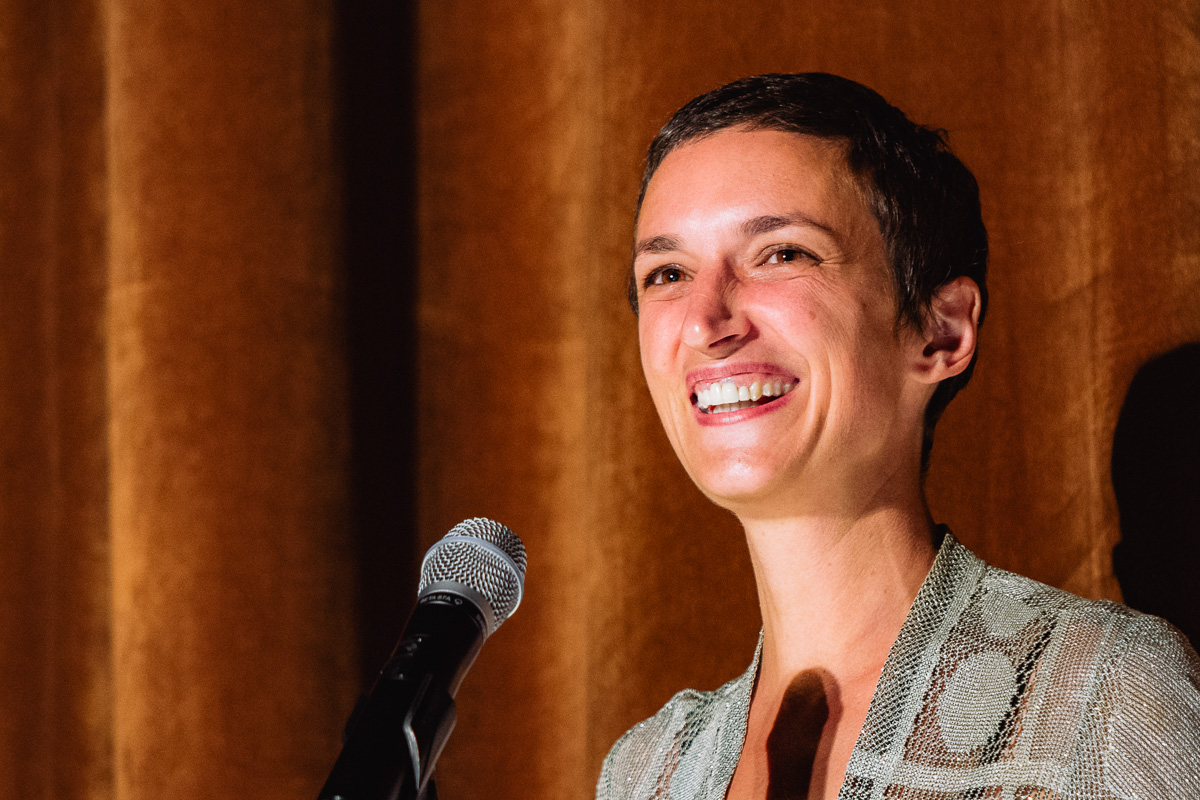
Christine Sajeicki
Read transcript
So it was October 2002. I was a 23-year-old recent art school graduate living in Savannah, Georgia, and I was underemployed, so I was in the studio a lot, listening to the radio. The news at the time was a lot: the Bush administration, speaking of mistakes, was building the case for invading Iraq based on the presence of weapons of mass destruction. Everyone knew, if you can remember that time, that there were no weapons of mass destruction and that it was a giant money grab. The arguments at the time were not effective. They weren't working. I felt like everyone was missing the big picture, which was that if we were all going to die, if we pursued wealth and oil over life and the environment, then, if we didn't die, we wouldn't have a world we wanted to live in.
My idea was to make an art installation that kind of laid bare our dystopian future. It's a really light story. There's this thing called the sculpture biennial that was happening in ten days in Savannah. It's kind of a poetic title because it happened twice a year in the same year. A bunch of artists had taken over a warehouse, and there were all these attached garage bays around the outside. I convinced the curator to give me the last available garage bay to do an art installation. Did I say the opening was in ten days? I had ten days to save the world, stop the war.
I teamed up with my friend Raquel. Maria Raquel Coches. You should look her up. She's still like a force of art and creativity, but so Raquel is on board, and we go over to the space and plan our idea. Here it is: we're going to clean out this space because it's still very much a garage bay with old broken lawn mowers and everything. We clean it out, and we're going to paint the walls white to make it like a quiet contemplative space and paint the floor AstroTurf green. We then tile the entire thing with pennies. That took about $97, which is all of our savings. Laying across this penny floor was going to be just one enormous, like 20-foot-long paper mache sculpture that was supposed to be evocative of both a pipeline and a serpent. It would kind of curl around elegantly, kind of beckoning to you. It was supposed to be this kind of beckoning space that would be appealing but would be kind of menacing and revolting ultimately, and then
You would want to stop the war so we get right to work. We're either at the space, cleaning it out, painting the walls, gluing the pennies down, or we're at Raquel's house, where we built the sculpture in three parts. We built an armature, like three tubes, seven feet long or so each. We stuffed it full of cotton batting and just bulky garbage to give it some structure, and then we're papier-mâchéing it.
We start out in the beginning, and we have this righteousness. We're young, and we're just saving the world with our hands and with art, and we just feel so good. Around the clock, we're working like this. By the end of about a week, we're just stinky and tired, and there's no end in sight to the work, but we still have left to do, and there are three days left of the opening.
We needed something that would keep us going, like motivation. We needed to see, catch a glimpse of what the sculpture was going to look like when it was painted. I mixed up a black that was like the perfect kind of petroleum black, luminous and deep and dark and warm, and we applied it all over the sculpture. It was really such a pleasure to do. If there are any painters in the house, like ink soaking into dry, thick newspapers, really, it just gathered in all the wrinkles and organic texture, and we started to feel good again, feel like we could do it until we stepped back and looked at what we had made
And there's no other way for your eyes to see a long, lumpy, essentially dark brown tube as anything but a poop. It's like striking verisimilitude, such realism: a twenty-foot-long beckoning poop. We've been working so hard and doing our best and pushing our limits, and we just couldn't let the dream die like that. We were like, "No, we're not seeing this. We did make a poop. We are going to take it to this space because we were just looking at it in her garbage apartment. It was covered in paper mache everywhere. We're like, "We need to see it, and it's like a palace of contemplation where it belongs."
A few minutes later, we have it on the roof of Raquel's car, which is just really like a stupid faux luxury pearl white car. It doesn't have a roof rack, so we each have one arm out the window, clutching the turd, and we roll out into the street. We didn't even know what day it was because we've been working so hard. It was Halloween. This her block is full of sugar-high, slow-moving zombie teenage football player vampires, and we're like, "They're not going to notice us. We're fine." We're rolling on through, and the first guy that notices us says, "Oh my god, that's awesome. That car is dressed like a giant turd," and then everyone turns around. Everyone's clapping and pointing, and I'm like, "Turd mobile toilet car." They know they love it, but it's not making us feel bad. They're better, so we turn off that road as soon as we can and we're cruising along, kind of spacing out. My eyes catch on the side of the road this little black and white kitten, and it's looking right at me. Its body is tense, so I know what's gonna happen, and I scream and I brace myself against the car and I'm like, "Raquel!" and close my eyes. She sees it too, so she grabs the wheel with both hands and slams on the brakes, and the car screeches to a stop. The weight settles back, and the cat is fine, you guys, but we hear a sliding, scraping noise coming from the roof
And we look up, and it's just too late. We can see our hands are not holding the sculpture. It's like an eclipse, like there's a streetlight here, and there's just this black shape just eating all the light in the world. It's happening in slow motion, and I don't know if anyone's ever seen a tree get chopped down. This is like a heartbreaking moment where it seems to jump off the stump, like heroically, crash to its death. That's what the sculpture did: it got out to a certain point and then seemed to gain momentum and speed and just slammed onto the hood of the car and crashed open.
There's cotton batting and garbage and poop-colored newspaper everywhere, and it hits the ground again and crashes more. What are we going to do? We just watch it happen, and then a look. It's just, I mean, it is our dystopian vision come true. It's like a cloud and a poop got in an epic garbage fight and killed each other in the street, but the sky in the dark wasn't the biggest mistake that happened that year. In fact, I don't even think it was a mistake anymore. It really did perfectly capture that political moment and maybe this political moment as well.
We went home and went to bed
Jacob Atem
Read transcript
So I was born in South Sudan, in a small village called Mar. I live by the Nile, and life was beautiful. I live with my relatives, my cousin, my siblings. I don't know about you, but I love cows. Any cow lovers? I see.
My job at age 7 was to look after the cattle. I was a cattle herder, and unfortunately that beautiful life along the Nile was taken away from me when the militia from Northern Sudan invaded my village. In that attack, I lost my parents, and not only my parents, my sister and my nieces are still in slavery. Today, 2.5 million people died in this war, but I was really young. I was about six or seven. I have to admit I was not born in Johns Hopkins Hospital, okay
So when the attack happened, I was with my cousin looking after the cattle, and we escaped into the woods. At age seven, I kept asking Michael, "Are we coming back?" because it had been a week, then two weeks, and I realized that we are not coming back. That was the answer.
The next thing we realized is that a bunch of boys from our surrounding villages started coming. The difficult part is I had no idea back then that we are heading to a place called Ethiopia, but let me describe to you the journey.
The journey was very difficult. The enemies of northern Sudan didn't stop there. They were following us with their guns, with a tank, and, by the way, they were coming with a helicopter, an old Russian-made Antonov, so they were bombing us. We didn't have enough food. The difficult part is we didn't have enough food to eat, and I always ask people in this country, "When was the last time you drank your own urine?" We didn't have an option but to drink our own urine.
Now, fast forward. The wild animals were very, very vicious, especially the lion. A lot of people got attacked, and a lot of people got eaten by crocodiles. We finally made it to Ethiopia after three to four months. I didn't have a lot of fond memories of Ethiopia. We stayed there briefly, but we had to be kicked out, and we had to walk again to a country called Kenya. It has been estimated that we have walked over 2,000 miles, and a lot of people were dying.
I have great memories in Kenya. I was in the northern Turkana district, in a place called Kakuma refugee camp. In this camp, you are literally waiting for your death. I remember when I would go and play soccer all day, forget about education. I didn't have food to eat. I remember when I would be blind temporarily in the refugee camp, but sometimes, when you lose hope, there are some times when some people out there are looking out for you.
In 2001, I was resettled to a place called Michigan. Let me tell you, speaking of misunderstanding, let's start from there. When I first came to New York, I almost electrocuted myself. When I arrived in Michigan, they said, "It's white as snow." I didn't understand it. When I landed, my foster mom, a wonderful woman, picked me up. She's about 5'5", and my first question was, "Mom, you are too short. Can short people drive?" She said, "Yes." Let me tell you, the first food I ate in America was pizza. I know you guys are pizza lovers. It was great, but let me tell you, it was a lot of misunderstanding. Language was difficult. When we see the sign that says "Dead End," with our little English, we say, "Well, you go there, and you will never die again. Do not even try to tell us that the man has gone on the moon. Okay, that is just something we cannot even comprehend, but eating three meals a day"
Time is a day was a miracle. In a refugee camp, you spend three more days without eating, but we are eating three times a day. Life was great, but I want to take you back. I just went so fast, but let me tell you, as a refugee, as an orphan, I was bullied a lot, and I was used to fighting a lot. I used to be so angry, and because I don't have relatives to look up to, I get beat up all the time, so I was known as notorious, if you may say. I was known to be fighting.
Even remember, I know my wife is here, don't hear this, where ladies would say, "I hope someday you will never get married," because I was used to beating people up in a refugee camp. Now keep that thought with you.
Life was great in America. My foster mom would take us in the morning to the bus station, and we go to school. By the way, I was not introduced to the former school, like a former school. I was in sixth grade in Africa, and I was put as a freshman in America, and say, "Welcome to America," and my first class was Shakespeare, "Be aware of Macbeth." There was a lot of misunderstanding.
One morning, as I was, my foster mom just dropped me off at the bus. I don't know what happened, but this kid was sitting next to me. He came and said, "Hey, what's up, monkey?" You should have seen my eyes. I grabbed the kid. I wanted to punch him because this is how we do it in Africa. You punch the kid. My cousin got me back. Okay, that's how we do it. Fortunately, my nephew was there. He pulled me back and said, "Don't do that."
I went to school that day. I never focused. I wanted to punch the kid so bad, and I start learning about my constitution, trying to say, "This is my constitution or what's not." What was so stressful is that there were some teachers who I stuttered to, and they didn't want to acknowledge that it was derogatory, that it was bad. The teachers split, and some said for me, some said no, and that devastated me.
I went back home, and I got this sign that said, "Jacob, you are grounded." That was from my foster mom. I'm like, "Why would I be grounded when a person called me a monkey?" My mom taught me a very important lesson. She sent me down and said, "Jacob, do not ever touch somebody with a shirt again. You have to remember when I told you I used to fight, that was difficult for me, but she told me, 'I heard you want to punch that kid. Do not do that.'"
That night, I told her, "You know what, I'd rather go to Africa. I had enough. I'd rather stay with my cousin in Lansing," and she said, "Okay." I went to bed. I cried and cried because, as a refugee, I never thought that, coming to this country, the only thing you could get is being called a monkey. Instead of going to my cousin, I told my mom I'm gonna have a fight, a good fight, and that is where I start to have a strategy. I start having a tape recorder. People will call me "monkey," "n-word," you name it, and I will record that and give it to the principal. The student would be punished or actually suspended based on the language and the foul language they have used. I did that for a while, to the point that the student would come to me, "Jacob, do you have a tape recorder on you?" and I say, "Yes, it's America. You have a freedom to do whatever you want, but I have it sometimes. I don't even have it on me."
Let me tell you, this was a huge turning point for me because all I know is violent is PTSD, is traumatized. Let me ask you one question: had I punched that kid today, at that time, where would I be today? I went and graduated with my bachelor's, master's, and now I am at the postdoc at Johns Hopkins Center for Humanitarian Health.
To conclude, that was 2001. Imagine this is 2018. Given the current political environment, as a next refugee, as a next immigrant, I don't know what it would be like. I just want to say that the decision I made, like I made, non-violent, has a long-term positive outcome than the violent way. Thank you so much, and thank you for coming today
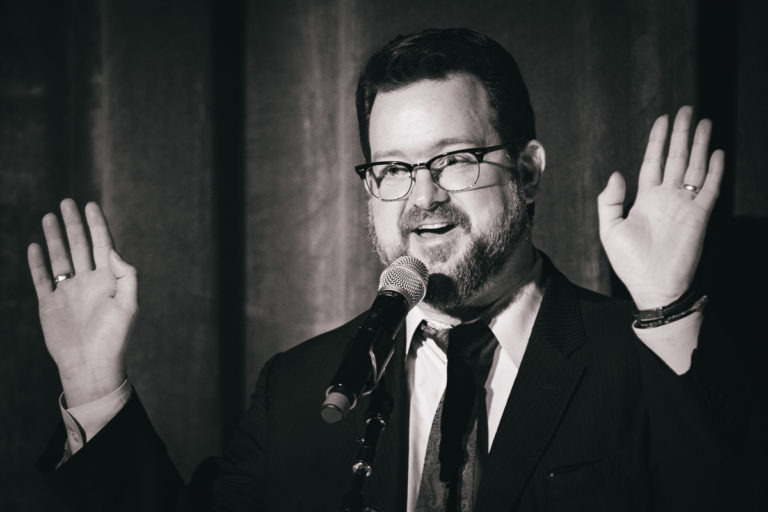
Jason Cross
Read transcript
So 1986 I was in college in Laramie, Wyoming. Yeah whoo! Somebody out there loves me or Wyoming, I don't know.
Anyway the upshot is that I knew I was Norwegian, kinda vaguely, like great granddad off the boat, blah blah blah, whatever. I run into a bunch of Norwegians. Weirdly enough, there were 76 Norwegians at the University of Wyoming in 1986. Seeing 76 Norwegians in Wyoming was kinda like seeing the cast of Vikings going through the Anne Arundel Mall. Less dirty and probably wearing more hip clothes, but still, you get the idea: there are really eye-openingly large people. They're gorgeous, they're really hip, they got the swagger, and I was like, I want to party with you guys.
As luck would have it, I met a friend of mine, a lifelong friend, in communications class named Arl Johansson, but he went by AJ because nobody could pronounce his name, and I probably just butchered it. AJ is like, hey man, you guys should come to this party that we're having, and I was like, oh, I'd love to do that. He said, we'll stop by the bar tomorrow and we'll talk about it. Maybe we can get you in. I was like, that'd be great.
I get there, and there are two Norwegian guys named TJ and Ellen, and they're really lovely people. They were so interested in teaching me some of the culture and some language. I am all about this, man. I was 19, I'm ready to roll, man. I'm like, teach me your Norwegian because the women are gorgeous! They're like, hey, you know what, Norwegian women really like it when you speak Norwegian because nobody knows how to speak Norwegian. Nobody. If you know a little, just a little Norwegian, man, it goes a long way, and I was like, teach me your language, teach me Your ways tell me, dummy, and so they teach me. We spent like three hours going over one phrase, three words, one phrase, and they're very exacting. At the end of it, I said it perfectly, and they're like, "You are a natural." I said, "Thank you." Night comes, we roll in there and show up early. We'll introduce you to all the girls.
There were 22 Norwegian women there, and they were just like stunning. They were like, "Oh." I walk in, and it was literally like a hobbit walking into that elf house place. You know, like you walk in and it's like, "Oh, I don't belong here." They're like, "Oh," and I don't know. I just said a German accent, but you get the point. Should know better, there's embarrassment in Norway right now.
I roll in with TJ and Ellie, and they were my ambassadors to this culture. They come rolling over there, like, "You remember the phrase?" and I'm like, "Yeah." They're like, "Repeat it," and I did not. That's perfect, and I was like, "I'm good with languages." Oh
Like you rock and I was like, "Yes I do. I have the mullet to prove it. It's 1987. Deal with it."
We roll in and they introduce me. All those Norwegian girls are sitting along this wall, kind of sitting around chatting in Norwegian and so on and so on and so on. I'm like, "Oh man, it's beautiful, so beautiful, and I want to know you." TJ Milly, the verse girl, comes up and they're like, "Hi, this is Jason. Jason wants to practice the Norwegian on you." The girl looks at me, and she's very lovely. I looked down and I say the phrase, and she looks back at me and she goes, "That's really great, but now." I'm like, "Wait a minute, TJ Milly told me this: 'Hi, how are you?'"
I'm like, "She must not be having a good day." We go through every single girl in this joint, and they all look at me. They're like, "That's a very good Norwegian, but no." I'm like, "Man, these girls are having a bad day."
The party commences, lots of booze goes down. I kind of forget about the whole thing. I'm having a great time, mixing with the elves in my little Hobbit feet. I'm like, "Yeah."
Two, three days later I'm at the bar, and AJ had a brother named RJ. His name is Rohr, but it's actually pronounced Roar, hand to God. Again, I probably actually didn't even say that right, but RJ at the time was like the alpha Ouija man. He was impressive, had this swag. They were all a little older than me, just like bad asses, and I really wanted to get to know RJ and TJ and Ellie, of course, my ambassadors in the Norwegian culture. They're like, "Hey man, you should go up"
To RJ, repeat your Norwegian phrase. He'll be impressed.
I was like, all right, so I roll up and I'm like, "Hey RJ, Skaldipula." By the way, you might want to delete that one for your Minnesota audience, if you reach Minnesota. Skaldipula. He looks at me and his veins are like popping out in his hands, like, "Hey, hey, do you know what you just said to me?" I'm like, "Hi, how are ya?" He goes, "You just asked me if I wanted to have sex with you!" I was like, "Oh no!" and my reality came crashing down. I mean, crashing down.
By the way, I didn't mention it, but it was a toga party and all the Norwegian girls were wearing white sheets, and it was really amazing
And all this came crashing down on me. I was humiliated. I'm embarrassed. I'm like, "Oh my god, I just asked every single Norwegian girl in this town, if not this country at the time, to have sex with me." I walked off, and I was like, "I'm sorry," and I was crushed. About two hours later, it really, this is where I bottomed out. This is where I really hit the bottom, because it dawned on me that they all said no
Mike Molina
Read transcript
So I used to be a lawyer, and as a lawyer, if you get it wrong, somebody goes to jail for the rest of their lives. I kind of stopped being a lawyer, and I'm a teacher. As a teacher, thank you very much. As a teacher, you get it wrong, and someone hates themselves and loses all their self-esteem for the rest of their lives. So tomato to mama.
There's a lot of responsibility with being a teacher, and there's a lot of opportunity to get it wrong. I got it wrong recently, but the story starts about two weeks ago. I was actually getting it right. I was knocking it out of the park two weeks ago. My daughter is in 7th grade
And the seventh graders have a nasty habit of throwing the N-word around because they listen to hip hop. Not the stuff I used to listen to, although the N-word was fuller than that as well. It's just different, right? It's a different context, and they love the word because it's my brother, my friend, my dog, my homie. I was asked by the wise folks at Friends School, where my daughter goes, to come in and please talk to these young people to give them some historical perspective on the word
And so I gladly accepted. I told the story of growing up in New Orleans, which is where I'm from. I know everybody thinks in Wallace they're like, "Oh, jazz, Mardi Gras," but New Orleans is in the bottom of the South. You go any further south than you are in the Caribbean. This is the bottom of the South in New Orleans. If you grow up there, there is a long, racist, extremely racist history going back to slavery. It was a place where slaves would be distributed, redistributed, and slave people would lose their families and lose any possible connection to anything that they could hope to make of their lives, their children
this is New Orleans history, and so I'm telling them my history in New Orleans, growing up in the 80s, as the first generation to actually be integrated. I tell them, "When you hear the N-word, don't think my brother, my dog, my friend. Think of my mother at 10 years old, the oldest girl, in the first family to integrate her block in the Lower Ninth Ward."
I know that's hard to believe. The Lower Ninth Ward, from the infamy of the terrible, terrible destruction and Hurricane Katrina, was once an all-white neighborhood. My mother's family was one of the first black families on the block. At 10 years old, my little mother, who became a special education teacher for 25 years, who I walked across the stage with at Xavier University as she got her master's, we graduated together.
She was an amazing woman who raised us while she was a librarian and a teacher and in school at 10 years old, having to walk home and walk through boys throwing rocks at her and spitting on her and calling her the N-word. When you hear the N-word, don't think my brother, my friend, my dog. Think of my mother, who didn't deserve that, being spit on. I said, when you hear the N-word, think of my father, who grew up to get his PhD and became the president of a community college in Alabama. When he was eight years old and his could-pass-for-white mother was walking with him on Rampart Street in New Orleans, he had to use the bathroom. She took him into this whites-only establishment, and they saw her and said, "Come on in, ma'am." They saw my father and said, "You can't bring that little N in here."
And my grandmother, a very proud woman, turned beat red, and my father told me this story on his deathbed, where he said I was so embarrassed my skin had shamed my mother and he carried this with him and told me it on his deathbed. I said, "When you hear the N-word, don't think of my brother, my dog, my friend. Think of my father, and he didn't deserve that." I said, "When you hear the N-word, think of me, fifth grade, 10 years old, the first black boy to join this all-white Cub Scout troop in Lakeview, an all-white neighborhood in New Orleans. We were there, and you know integration wasn't real smooth. I don't know if you know that. It wasn't like kumbaya, my long-lost white brother. It was more like, 'Let's play football, and when we play football, let's make sure to organize the way it should be organized: black versus white.'"
And so we did that at the Cub Scout meeting. We'd have the Cub Scout meeting out in front of the Cub Scout leader's house. We would have black-on-white football games. Believe me, this was the best way to deal with what we were feeling, honestly.
The problem was, usually in football games, they can get physical and aggressive, and when you add in racial dynamics, they turn into fights. Often our physical football games would turn into fights that one particular time. I got in a fight with the Cub Scout leader's son. I remember, I don't know where I got this from. Who does this in a fight? I upper-cutted him in his stomach, and he was crying. He goes back in the house. His dad, the Cub Scout leader, comes out. I'm a little kid. I'm not a big guy right now, but when I was 10 years old, I was tiny. He comes out and walks up to me and puts his hands around my neck and squeezes a little bit. He says, "I could break your little neck right now, get away with it," and lets me go. I know I was afraid, but the thing I really felt more than anything was just resignation, because I knew I couldn't do anything
Couldn't physically get this man off me. I couldn't defend myself. It was a moment of less terror than just anger, fear, resignation, just all these emotions that I couldn't handle at that age. I told this story. I said, "When you hear the N-word, don't think my brother, my dog, my friend. Think of me, a little 10-year-old boy getting choked by a grown man." Right? The hatred that it would take a man to do that to a child. Think of the scar on my eye I got from a skinhead who hit me with a skull ring and spikes on it. Think of all these things when you get the N-word, because that's the history of it. Right?
The kids asked these great questions. I was like, "Oh, this is not getting it wrong. This is right." I mean, they were asking the perfect questions: "Are you still angry? Does it still bother you what happened to your mother? Does it still bother you what happened to you?" I didn't have an immediate answer. I was kind of like, "Well, I know they didn't deserve it. I didn't deserve it. I really didn't give them a good answer."
The rest of that weekend and the rest of the week, I was in a funk. I mean, I could feel this unease in my body, this anger, this rage. I didn't have any place to put it. It's just disgust, shame, guilt, embarrassment, just all these things. I was feeling it as just a malaise throughout the rest of the weekend. I realize I hadn't processed so much of this stuff.
I talked about it. I told the story, but I hadn't really processed the pain of that: being a ten-year-old kid with a grown man wrapping his hand around your neck and calling you this word. Fast forward a week or so, I'm teaching Huck Finn at Gilman, which is where I teach. I teach juniors, which means it's coordinated classes: girls from Brentwood and Roland Park and Gilman are all in the class with me, and I really appreciate being in co-ed classes.
We're teaching Huck Finn, and there's this one girl. She is really, really getting it. I mean, she's hitting on all cylinders. She recognizes how Twain is playing with the notion of whiteness as so-called purity and goodness. We're talking about Pap, Huck's dad, and how he's a drunk, evil bastard. He's frog belly white, and he's dead fish white, right? She's getting it right
And I keep calling on her. Let's call her Allison. I keep calling: "Allison, Allison, that's a great point, Allison." Finally, a boy sitting next to me says, "That's not her name," and I'm like, "Oh my god, this is an Asian student, and I confused her with another one of my Asian girl students in another class."
The two girls had zero in common. The girl I confused her with is direct from China. She has a really thick accent, and she looks like she's not, you know, born or raised in America. You can tell when somebody's not born or raised in America just by the way they present, and they really have nothing in common.
I'm just like, "Oh my god, I'm so sorry, I'm so sorry." Please come talk to me after class. We continue with class. I go up to her and I say, "You know, I'm really, really sorry." She's like, "I would even hear it," so I'm like, "You know what? Even if you didn't hear it, I really want you to know I see you."
I see you. You are really smart. I read your paper, and I started trying to quote things from her paper. I know who you are. I see you, and I'm tearing up while I'm apologizing to her. She's looking at me like, "What the hell? Is it really that big a deal to you?" She's probably like, "This happens to me every day." I'm just like, "I don't want to be part of that." You know what I'm saying? I don't want to be a part of that.
I had to apologize to her. I thank the boy for stepping up and acknowledging that for her. If she didn't hear, maybe she did and she didn't want to say anything, but he stepped up. I'm thinking about why I got so upset about it. I go talk to my colleagues, and my colleagues are kind of like, "You know, that's not that big a deal. It happens."
Happens, and I'm like, "Nah, but it is a big deal." One of the reasons I don't often like telling the story about being choked and what happened with my mom and my dad and all that is because I think it lets us off the hook a little bit. We can all walk out here and be like, "Well, I'm not that racist. I'm not that dude. I would never do that," but the truth is we all get it wrong, right? I'm nothing like any of the people I described who terrorize my family or me, but here I am erasing a girl, a smart, intelligent young woman, like being as her teacher, based upon her race. That's what that word does. That's what the word ultimately does. This is what I was trying to communicate to the seventh graders, and here I am kind of undermining that with my juniors
And so I got it wrong, and here I am telling the story to you all, and I was struggling. I asked one of my peer storytellers, "What should be my point? What would I buy?" She was like, "Maybe you don't have a point. Maybe you don't have it figured out." I was like, "Thank you. You just solved that problem for me real quick."
Ultimately, I don't have an answer for you. I know that we get it wrong. You know that if we can get it wrong and then forgive each other and be generous, if we can get it wrong and be humble and apologize, if we can get it wrong and just be genuine with each other and say, "I got it wrong, will you please forgive me?" I think we can figure out how to get it right. Thank you
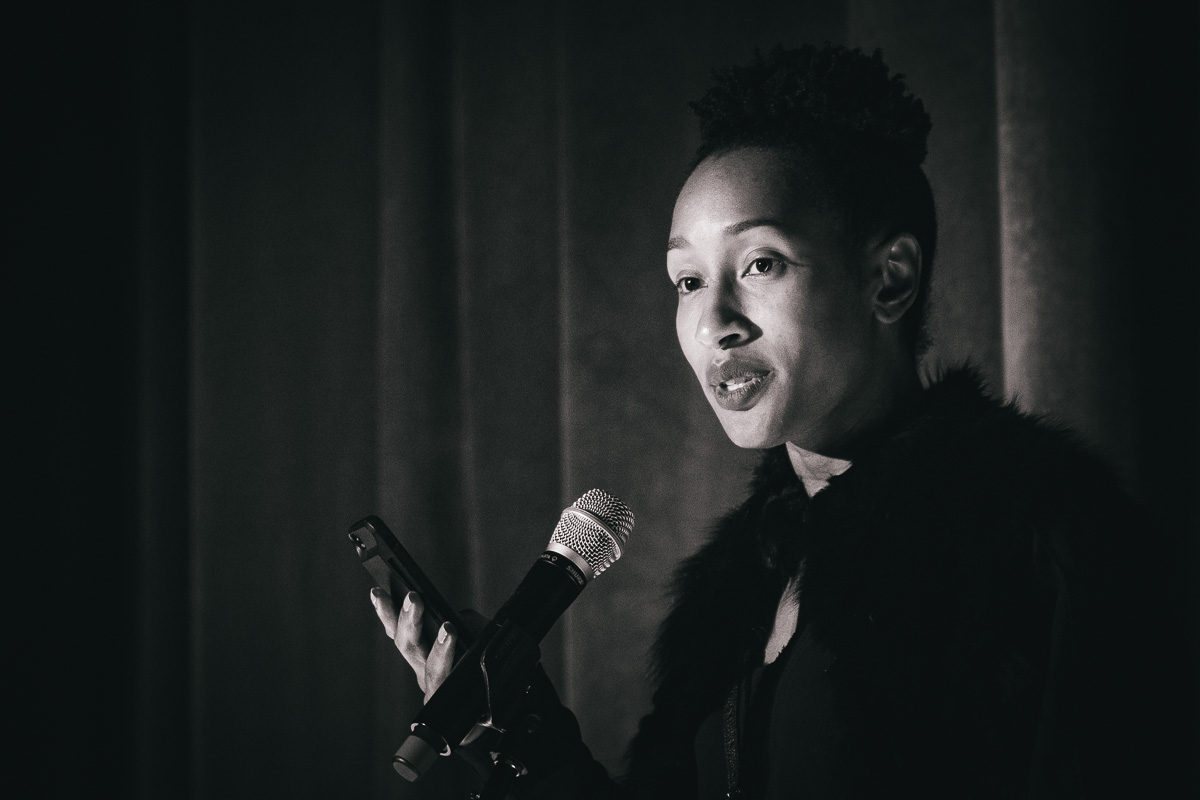
Natalie Gillard
Read transcript
My name is Natalie Gillard, and I call this holistic minimalism. "Rid yourself of the people, places, things, and beliefs that feel like your discomfort" is a mantra that I routinely recite to myself and others. I found myself overwhelmed once again by this recognizable feeling that I now define as internal conflict. Finally, I had identified a name to describe what inevitably and consistently leads me to earth-shattering heightened self-awareness
I have grown to welcome the feeling of internal conflict as I now know that it leads me to immense growth, but I must admit that the onset of this feeling is entirely horrifying. Ridding yourself of the people, places, things, and beliefs that feel your discomfort requires an intimate exploration of the intricacies of burdensome obstacles.
In my most earth-shattering experience, I found myself painfully navigating several strained relationships of varying types: familial, romantic, and platonic. I am no stranger to soliciting the support of licensed mental health professionals to aid in the reconciliation of said burdensome obstacles. My earth-shattering breakthrough, however, came unsolicited, out of the blue, and free from a dear friend's sister, who said: "Please tell Natalie that I get the sense that she is going through a really challenging time, but her present obstacles begin and end with her."
In short, we are, in many instances, the cure and the cause of our own grief. Now, my therapist affirmed that I was in fact being mistreated in the reference familial, romantic, and platonic relationships, but I swiftly came to the realization that I played the most vital role in the very issues that I paid a professional for assistance with reconciling
Reflect on the frequency in which you experience complete fulfillment. The choices you make in life dictate your level of fulfillment and satisfaction, which is why they should be executed with intentionality in the forefront of your mind. I believe that we, within reason, can create lives that are almost entirely fulfilling, but that begins with ridding yourself of the people, places, things, and beliefs that fuel your discomfort. I asked myself, in regard to the reference types of relationships, what would provide more discomfort: – Abiding by societal expectations and dictations as it pertains to familial relationships – Being consumed by guilt inflicted by others for possessing an authentic inability to participate in traditional romantic relationships – Holding on to mediocre friendships almost exclusively due to the years invested in them So again, but in short, what fuels more discomfort? Holding on to relationships despite their levels of toxicity, or ridding yourself of known discomforts in spite of the historical emphasis of importance placed upon them? Ingrained into our brains is this notion of never giving up. I, however, happen to be a huge proponent for calling it quits, understanding that tremendous courage presents itself as a prerequisite
The day I began writing this, I poured out many of the feelings just shared to one of my best friends in the midst of affirming emotions that I too deemed warranted. She reminded me that I was "popping, y'all, so popping" that the only issues referenced were entirely beyond my control. The only issues that I had had nothing to do with me but everything to do with: 1. one, the inflictors and their ability to unpack their respective internal conflict 2. two, my reaction to what they were incapable of Alas, I truly was the cause and the cure of the grief I had been experiencing. I didn't always welcome the feeling of internal conflict because it requires putting in the type of work that fuels a different type of discomfort, you see. I had a tendency to normalize really messed up experiences, but unpacking the internal conflict that would arise from these experiences inevitably disrupted what I was conditioned to accept as normalcy. Taking those initial steps to uncover the origins of internal conflict breeds feelings of trepidation. Unresolved internal conflict, however, breeds toxicity. Unpacking it will ultimately serve as the most blissfully disruptive journey that one could ever embark on. Rid yourself of the people, places, things, and beliefs that feel your discomfort, but don't neglect putting in the work that will best acquaint you with understanding how and why your comfort was compromised
you will likely find yourself as the common denominator in your internal conflicts, which also offers invaluable lessons about accountability of self. Exploring the origins of internal conflict directly correlates with the ability to rid yourself of it. I was the cause of my own grief, but implementing this type of intentional self-care allowed me to discover that I had always been the cure. Thank you
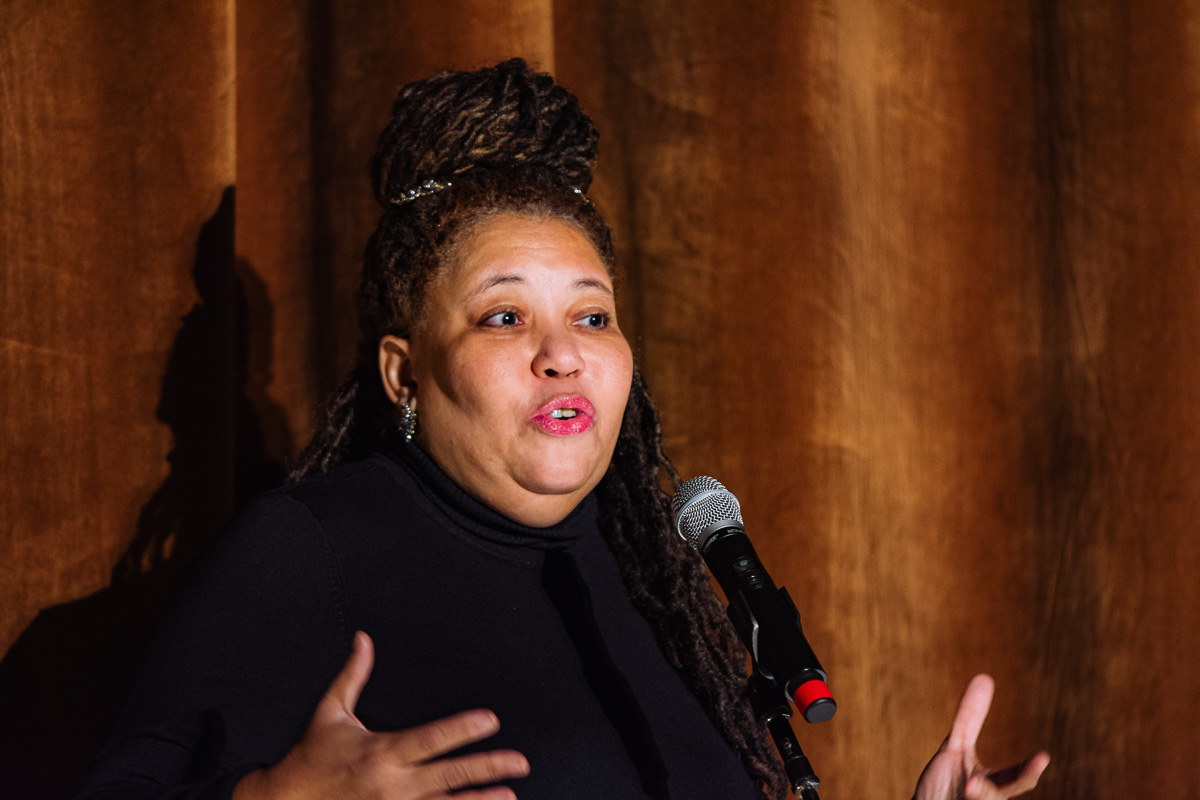
Petula Caesar
Read transcript
For as long as I can remember, I always wanted to attend Howard University in Washington, DC. Howard University is an HBCU, which stands for Historically Black Colleges and Universities. I wanted to go there, be in their honors English program, and become a writer. I applied to five colleges, but Howard was always the goal. I got into all five colleges I applied to, including Howard into their honors English program. I was thrilled. My dad was not. My dad was born very early 20th century, very light-skinned, straight-haired, white-presenting African-American man and
He learned very early in his life that, to be successful and to survive, it was going to be important for the white men in the town he lived in to like him. So he became deferential. He became docile. He became bright, but not too bright, never too threatening. In behaving that way, along with his white appearance, the white men took a liking to him. He got jobs that paid well. He was able to secure his family financially, so he wanted that from me also. That meant no black things in our house, no black music, no black literature, as much as I love to read. He was a painter. He never painted black people, and there was no black art in our house. I was always told to make sure I spoke the King's English at all times. He was a little disappointed with the hair, but he kept me in the salon a lot so he kept me bone straight. When I got into Howard, he started saying things like, "Are you sure a black university is going to challenge you academically?"
You know, the world's not really black. The world is really white, and you're going to be in D.C. alone. You're going to be okay, and most importantly, as much grief as black people have given you, which they had, because they had teased me all my life, don't you want to finally get away from them? He talked to me this way all summer. By the time the third week of August rolled around, I was moving into the dorms at Towson State University, my fifth-choice school. I hated Towson. It was awful. I didn't want to be there. I immediately started flunking all of my classes. It was bad. I was devastated because I've never done poorly in school.
There was one bright shining light at Towson: my roommate, the complete opposite of me, blonde, blue-eyed, well-to-do family, grew up in a little town on the Jersey Shore. We bonded immediately. We have so much in common: we love the same book, the same writers. We liked the wine a whole lot. We listened to the same music. We just got along. We shared clothes. We share makeup. We were best friends, and she always encouraged me to try to stick it out at school.
My boyfriend was also worried that I was so unhappy, so he came to visit me one Saturday to try to cheer me up. My roommate said, "Why don't we do a double date?" so she, the guy she was seeing, my boyfriend, and I went out off campus and had a great time. The boys brought us back to our room. My roommate turned to me once the boys left and said, "Do your parents mind you dating a black guy?"
Why would they? Well, my parents are pretty liberal, but I think if I brought a black guy home, they'd be pretty upset. Sure they would be. What's that got to do with me? It took a couple of rounds of this for me to realize what was happening. She thought I was white, so I had to stop her. This was awful, so I said, "Hold up, I am not white. That's why my parents don't mind me dating a black guy."
Her eyes got really big, then she squinted and she looked at me for a long time, and she said, "Petula, why didn't you tell me?" I said, "Why did I have to tell you?" when she said, "I've never met a black person. I mean, look at you, listen to how you talk. You listen to Queen and David Bowie, for God's sake. You know so much about wine, and why would I think you're black? I mean, look at you."
She went over to the bed where I had a couple of articles of her clothing that I'd borrowed, and she snatched them off the bed. She went to my desk, and there were a couple of makeup items I borrowed. She snatched them off the desk, and she looked at this bottle of Cover Girl foundation and she said, "I can't believe a black girl wears the same color foundation as me."
I can't believe you deceived me this way. She stormed out of the room to tell the other girls in the quad, who were also white girls there, that I had lied about being white. I'm devastated. This is my best friend. This is my only friend.
Why did she think I was white? Why was she upset that I wasn't? Why did she feel deceived? Then I started to think: had I presented myself in a way, subconsciously, so that she would like me, or had I done something?
The one thing I was sure about was that this wouldn't have happened to me at Howard University. I decided I was going to leave Towson, and I went home for Thanksgiving break to tell my dad I could not go back. As fate would have it, my dad took sick that Thanksgiving and was in the hospital for quite a while, for months actually. When he came out and was on the road to recovery, I told him what had happened to me out at Towson. My dad looked at me and said, "She thought you were white? Really? Well, why did you tell her you weren't?" That's when I realized I really needed to stop listening to my dad.
Thank you for your time
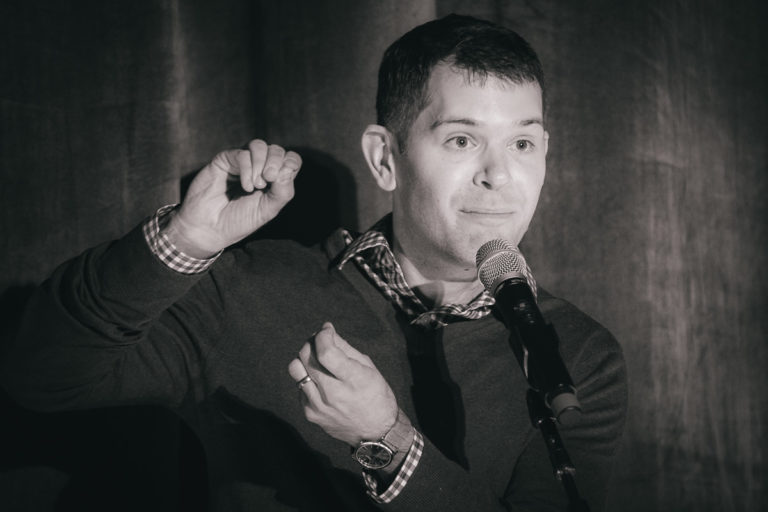
Sam Sessa
Read transcript
Middle school sucks. I don't know about you, but I was chased around, I was picked on, I was beaten up by people that I thought were my friends, and I could not wait to be out of middle school. When I got to high school, ninth grade was a dream. It was a new school, I had new friends, it was a fresh start, it was everything I wanted to do. Ninth grade just went by so quickly and so wonderfully.
That summer after ninth grade, me and my best friend Will were sitting around trying to figure out what we're going to do that day. I come from Kent County on the Eastern Shore of Maryland, and there's not that much to do in Kent County. I come from a place called Galena, Maryland, and the nearest supermarket is 18 miles away. We're sitting around trying to figure out what to do, and perhaps because of the lack of options, we decided that we would get on our bicycles and ride four miles up to this place that was a gas station, a restaurant, and a hunting store. We were going to buy a large bottle of black powder. This is what we were going to do because we were going to have some fun with it, where we had plans. We bought this black powder. This was 1998. We were 14 years old, and therefore legal. It was legal for us to purchase this in the State of Maryland. They put it in a plastic bag on the handlebars and rode it four miles home to my grandmother's house. We got down into her basement, where there were no adults around, and we decided that we were going to build our own bottle rockets. We got these little coin wrappers, and we would put a coin in the top of the wrapper. We put a fuse in the bottom, and we'd fill it up with black powder, take it outside, set it on a level surface, and light it. It would go "pshew!" up into the air and 10-15 feet, like our own little bottle rockets. Okay
It was kind of cool for young teenage boys, and we did that for about 45 minutes or so and kind of got bored with it. We went back into the basement and we're starting to pack things up.
My buddy Will says, "Hey Sam, watch this, this is pretty cool." He poured a little bit of the black powder on top of the metal vise grip on my grandfather's workbench and he lit it on fire and went "foosh!" We were like, "Okay, that's kind of cool, I guess," and then he poured another one on there and did it again. He's like, "What do you think of that?" I was like, "That's cool too, but we should really be getting going."
I started to walk towards the door, and I turned around. He says, "Stop, wait, let me just do one more." He pours that last one on the vise grip, and he didn't realize that, as he'd been pouring these, he spilled a little bit along the workbench. He lit it and it went "foosh!" and didn't stop. It kind of went down the side of the vise grip and along the top of the workbench. He couldn't see this from where he was standing because the vise grip was right here in front of him, and it was kind of happening down there, but I could from where I was.
It all happened in less than a half a second. It went down the vise grip, across the top of the workbench, and up the side. It flamed up high enough to go up the side of this large plastic bottle of black powder that had no lid. In the movies, an explosion leaves this big smoldering crater, and there's nothing else around, and that wasn't quite what happened. It was maybe because it was black powder instead of proper gunpowder. I don't know. I guess we were kind of lucky in that, but it was like a loud, instantaneous fireball coming at me, and it was like "fwoosh!" like that, and then it was over.
In that split second that I had, I got my arm up so I kind of squinted and got my arm up and got my eyes closed, and I watched this wall of fire come at me. Then it was just black. There was so much smoke I couldn't see anything. I couldn't breathe. I ran up the stairs into my grandmother's house, thinking that Will was right behind me, and I turned around and he wasn't. I held my breath and ran back down inside looking for him. As it turned out, he'd gone out the side door, up one of those basement stairs from the outside into the yard, but he thought the same thing about me, so we were bumbling around in there, breathing in all this smoke. We finally got out, and my face was red and blistered, but his face was black. I remember my grandmother taking him into the bathroom and splashing some water on his face. I remember pieces of his face coming off into a sink.
They called the ambulance, and two ambulances came. I got into one, and he got into the other one and got to the emergency room. You've got second-degree burns, partially third-degree, on your face and your chin and your forehead, but thankfully my arm had caught most of it, so I just lost a bunch of hair. I had some burns in my arm and stuff, but not right in the middle of my eyes. It looked kind of like reverse Superman, like there was a mask of white across my face. Will was admitted to a burn center and spent a week there. He had damage from inhaling the smoke in his lungs, damage in his eye from seeing that blast up close, and third-degree burns all over his head.
Part of me wanted to be mad at him, but how could I be? He didn't know this was going to happen. It was an accident, and he was hurt way worse than I was.
That's not where it ended, because when we went back to school a month or so later, we got to school. This was 1998. It was a couple of years after the Unabomber, pre-Columbine and pre-9/11, thank God, but we were known as the frame of reference was the Unabomber. I went back to school as Sammy the Unabomber, which was just so soul-crushing for me and for Will too. I felt like I'd come so far, I'd started fresh, and now I was Sammy the Unabomber and
And that's what I heard everywhere I went. That summer after sophomore year, I applied for the same summer job I had for years, and they wouldn't have me back. I later found that it was because they were worried that I was gonna blow the place up. I spent that summer in a funk. I spent most of that year in this kind of low-level funk.
When I went back to school, I had this realization. This idea just hit me all of a sudden. There's a line in that show Mad Men where Don Draper says, "If you don't like what people are saying about you, change the conversation." I realized that it couldn't get any worse, so why not do whatever I wanted to do? I grew out these big mutton chop sideburns, in part to hide some of the redness on my face that was lingering from all that, but also because why not? I got into the late 60s and early 70s music scene, so I started wearing tie-dye shirts and pink bell bottoms and these crazy outfits and grew my hair out. Slowly, month by month, fewer and fewer people called me the Unabomber, and more and more people started talking about Sam the Hippy Guy and "What's this guy all about?" By the end of high school, I was one of two guys who were voted the most popular guys in high school.
When I think about that whole journey, it changed my life. I've spent the last twenty years looking at people who are ostracized, people who are cast out and looked down upon for no good reason, and really trying to help relate to them and look at them in a different way because I was one of them, in some small way, for a small period of my life. If I hadn't been blown up, I wouldn't be who I am today. Thank you!
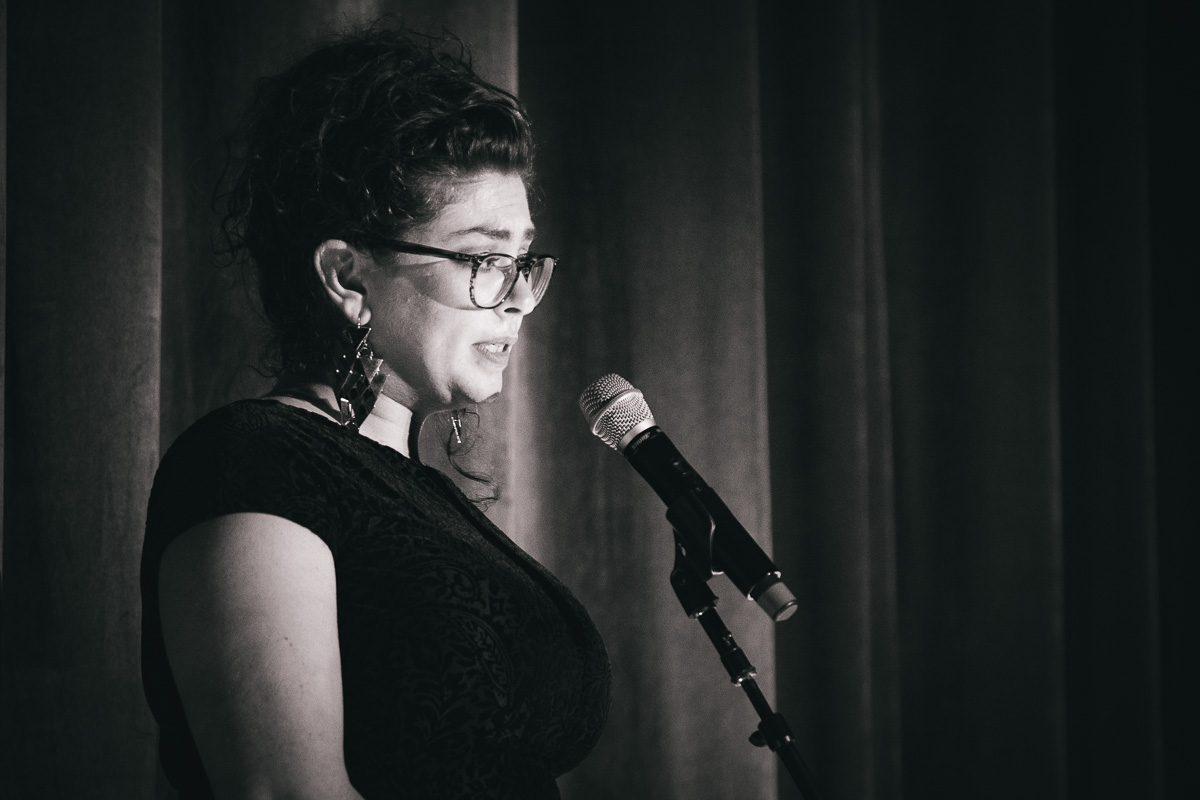
Sarah Sullivan
Read transcript
So I grew up in Massachusetts, and when I was 15, I went to live with my dad in California. At the time, my dad's biggest hobby was swing dancing. I ended up going out swing dancing with him a lot, and I really quickly fell in love with the dance. I was a pretty precocious kid. I really loved people. I thought they were inherently good, and not only was the dance awesome, but it gave me this really great way to meet all different kinds of people.
I quickly became obsessed with it, and I got this gig nannying for some instructors from England. This allowed me to fly around to different parts of the country and eventually the world, attending workshops and competitions and various things they were teaching at. I would take care of their kid during the day and get to go dancing at night. It was a pretty sweet gig.
What this meant was that I was often around all of the instructors at the event, so I was with the celebrities of this giant subculture. I got to know them pretty well. One of the celebrities in this subculture was a man named Steven. When I met Steven, he was in his mid-fifties. He was from L.A. He was one of the biggest names in Lindy Hop, the kind of swing dance that we do. He was one of the only black men in a position of authority in this community, considering the history of the dance, which was entirely too white.
I met Steven when I was 15, and I immediately knew that I had his attention because I could feel his eyes watching me, following me around the party. He introduced himself to me that night, and I was pretty excited, I was meeting one of my heroes. I saw him at events over the next few months and the next few years, and we would talk. He befriended me. We would dance together.
Dance together and then we started talking in between events online and on the phone eventually. This was pretty great for me. I felt like I had been chosen. Here I was desperately trying to be an adult in this community as a young person, and this person was telling me that I was mature, that I was special. He told me that he would help me with my dancing. He wanted to help me learn to sing, which is something that I desperately wanted to do at the time.
But then he started telling me, "People aren't going to understand this friendship, so it's really important that we keep it secret," and then he started introducing sexual topics to the conversation and normalizing it. When people were drinking at dance events, he started sneaking me alcohol. I thought we were friends.
In 2006, I found myself in a situation where I was in a really secluded area at a dance event. I was drunk. It was the middle of the night, and he was on top of me. I panicked when I realized what was happening and I started pushing him and punching him until he got off of me. As he walked me back to the place where I was staying, he grabbed me inappropriately and he said, "You started it. I don't know what happened to you that messed you up so badly." I internalized that and tried to smush it down, and I ended up in that situation one more time with him a couple months later at a different dance event.
But after that, I pretty much cut him out of my life. I didn't address what it was, but I didn't want to deal with it.
Cut to 2014. I am now living in Baltimore, 26 years old, four years out of college. I own the Mobtown Ballroom, where I get to teach swing dancing all the time. I have my own jazz band, so I get to sing. In college, I had met a really excellent therapist who had helped me address this issue a little bit, and I was sort of accepting it as a salt light, as my 20s mind called it.
But I had pushed it down and hoped I would kind of never have to think about it again, but here I was, still dancing and still seeing Steven at events. I avoided him pretty much at all costs, but now I was teaching young people from West Baltimore, and I was bringing them to the dance events with me. Suddenly seeing him at events took on a different light when I was with 15-year-old girls that I was responsible for. Something started nagging at me. I thought maybe this was really assault, and maybe I wasn't the only one he had done this to.
I did like an in-depth Google search of his name. I found this ridiculous website called Cheaterville where you can out your cheating spouses. Somebody had outed Steven, but in the comments underneath, someone else had said that when she was young, Steven had really hurt her.
And so, while this isn't proof, it kind of confirmed my suspicions a little bit. I started having this internal dialogue with myself. Do I have a responsibility, as someone who represents these young people and someone who this happened to, to say something, or am I making a big deal out of nothing, or is it a big deal? I'm colluding with him to keep his own behavior secret. At the same time, won't people be really mad at me if I kind of shatter their image of our hero?
Also, there's a legacy in this country of white women accusing black men of assaults, and what would it mean? Would I be perpetuating a negative stereotype of black men in this already racially fraught community? At the same time, if there were other women who this had happened to, I was in a pretty good position. I was still here. I was still dancing, but my paycheck came from me. I had my own community, and I wasn't really at risk. I didn't know how someone would go about making this known to the rest of the world. This was before the most modern rendition of Me Too. It was before call-out culture.
But I just started writing. I pretty much obsessively started writing. It was like I was vomiting up all of these emotions that I had tucked away for so long. While I was writing, which took me about a month, I did things like I read the instant message conversations that I had with him when I was a teenager. They were saved on my mom's computer, luckily.
I told my parents, which was really challenging. I called the people I nannied for at the time, who were like my other parents. Judging by their reactions, I decided, "You know what, I really do need to say something." In deciding that, I stepped back from the situation. I thought, "If there are other women out there, then they're going to be caught off guard. I've had all this time while this is boiling up inside me, so it's my job. I'm going to have to lay the foundation of credibility. I have to say this as clearly and accurately as I possibly can, and they can fill in the emotions later. If I'm going to do this, I'm going to need to know that I can handle the worst-case scenario if this entire community of people that I love turns on me and I'm no longer a part of it. I have to be okay with that, and in order to be okay with it, I have to know that what I'm saying is something I actually believe, that I know in my core that I'm right. This was the hardest part about it, because what it meant was that I had to look at the situation for real for the first time and realize this wasn't a relationship. It wasn't a friendship. I wasn't special or mature. I had been targeted, and Steven didn't have my best interests at heart, which means people don't always have your best interests at heart. I think that was the most painful part of coming to terms with this. I ended up writing something, my first and last blog post ever, and I posted it on Facebook. Last time that I checked, it has been read over 160,000 times. It was translated into seven different languages, and Steven no longer teaches swing dance. Thank you. Sure enough, more than 10 other women came forward, multiple of them saying Steven had raped them, some of them when they were teenagers, over the course of years and at the event that I attended. It really wasn't until hearing from these other women that I was able to actually understand what happened to me. Not only was it not a relationship, but it also wasn't assault light. I had been targeted and almost raped by a serial rapist. I think that you often say, "Why now? How come you came out with it now?" It took me almost a decade to come out with my story, and while assault can change someone's life in a single moment, I think the thing that changes somebody more is having to look at the assault and grieve the world that they knew before it. You have to give up your perception of yourself and your perception of the world as it was pre-assault, and that takes a lot of time. Thank you.
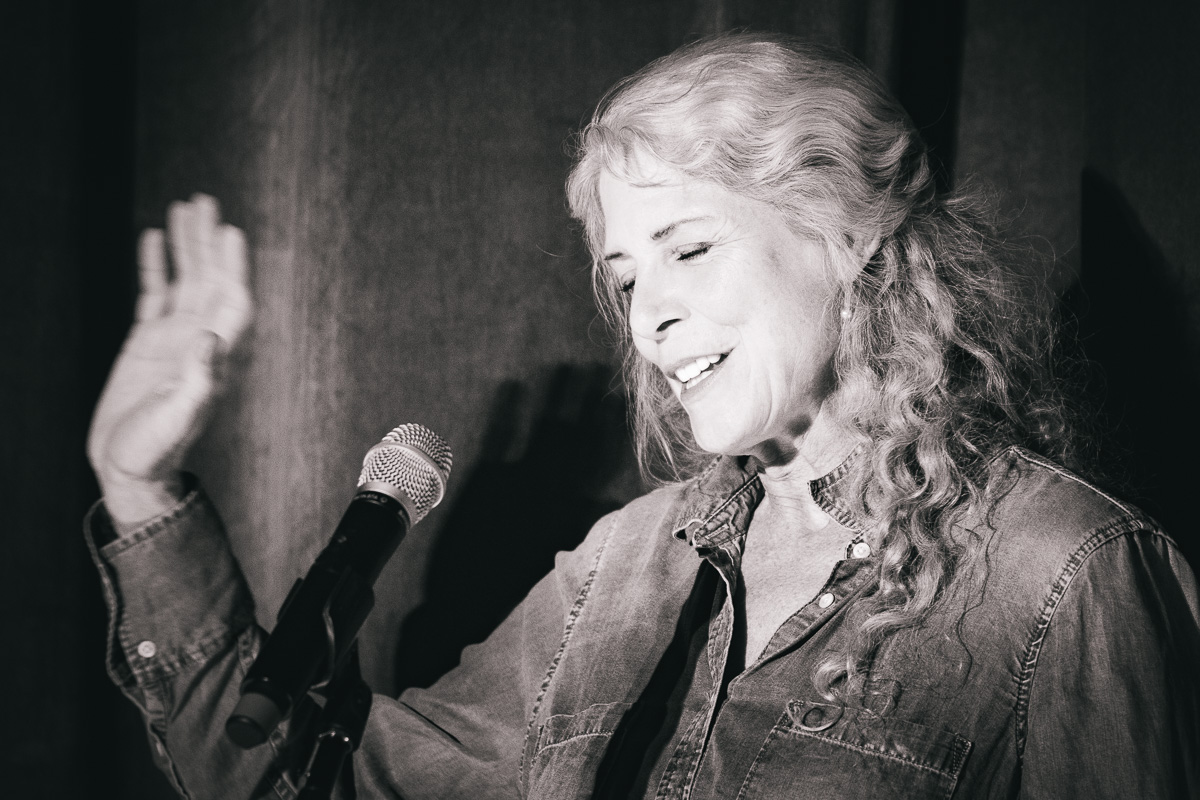
Trish
Read transcript
So, it is 1967. I am 12 years old, pretty much the same exact size I am now: rather large, well-developed, and I get to play outside all the time because our parents, who lived in a row house in Baltimore City, put us across the street in the woods to play all the time. That's where I spent most of my life. I come in one evening. I miss dinner. My parents just cursorily introduce us to a few of the dinner guests they had that night: a seminary student, a young man, and some exotic neighbor that I had never met, and a few other people. I go up and get ready for bed, lie in my tiny bed with them, a sister nearby. It's very, very hot. It's 102 degrees, and I'm trying not to burst into flames. The only air conditioning in the place is in the basement in the clubroom, where my sister, who has terrible allergies, gets to go down there once in a while and put the roll-away bed out and sleep because of her allergies in the air conditioning. She doesn't like me much, but she takes pity on me once in a while and lets me sneak down there if I'm very quiet and very still. I get to sleep next to her on the hottest nights only. This was one of those nights, and I go downstairs, creep down, slide in next to her. I'm lying there, and all of a sudden she bolts up and starts bellowing, but it's not her voice. I sit up and, at the top of my lungs, we're screaming, "Whoever this is, we're both this far apart from each other and at the top of our lungs." My parents think murder is being perpetrated, and they run downstairs, flip the basement lights on. I am in bed with the seminary student, and we're both screaming still. My parents, the neighbors call. They heard this screaming and thought, once again, there was murder happening. Anyway, I had to explain myself away, and my sister pitched in and vouched for me that occasionally she did let me slip in there, and that was just the best story to her ever. The seminary student quit shortly thereafter. I had nothing to do with it.
What “getting it wrong” made visible
The live Stoop show was not a lecture about misunderstanding. It was misunderstanding in motion: funny, painful, awkward, political, intimate, and sometimes unresolved. Some stories were about goofy mistakes. Some were about the cost of being misread. Some were about the moment a person realizes they have misread someone else.
That range mattered. It kept the project from becoming sentimental. If stories can help us connect, they do so partly because they let us stay with complexity. A story can hold laughter and grief in the same room. It can show a mistake without reducing the person to the mistake. It can make repair feel possible without pretending repair is simple.
Bridging Political Divides — One Conversation at a Time
Over two days, people with different political views sat down in pairs for recorded conversations. These conversations were not debates. They were opportunities to ask questions, listen to life stories, and better understand the experiences that shape another person’s beliefs.
The conversations below were recorded in partnership with StoryCorps through its One Small Step initiative.
Christopher DiGregorio and Bob Savage
Christopher DiGregorio (27) and Bob Savage (63) discuss political upbringing, how family and environment shape belief, and what draws people toward different political views.
“When you hear all this divisiveness going on, that's the kind of attitude I'd like to see — “I didn't vote for him, but I hope for our sake and for our country, he does well.” When somebody you don't vote for wins, they're still your elected official.”
— Bob Savage
“That was part of the reason I agreed to do this — politics is getting so divided that it's really hard to have a conversation from two different perspectives.”
— Christopher D. DiGregorio
“There's a lot of things we don't agree on, but it starts in that family unit and that love. You gotta respect them for what they believe.”
— Bob Savage
“It doesn't matter if you're doing well if your community isn't. A rising tide floats all ships — that's where a lot of the politics comes from: trying to benefit everybody, not just themselves.”
— Christopher D. DiGregorio
Some StoryCorps archive links may require archive access or participant permission.

Pat Forestell and Don Palmer
Jerome Patrick Forestell and Warren Palmer
Jerome Patrick Forestell (67) speaks with Warren Palmer (63) about how their childhoods shaped their beliefs, moments in U.S. history that informed their politics, and their shared belief that the country needs meaningful change.
“Lower the temperature — and let it begin with me. It's got to start somewhere.”
— Pat Forestell
“I thought we were supposed to be diametrically opposed… we may see different policy options, but we definitely do see that the problems need to be fixed.”
— Don Palmer
Some StoryCorps archive links may require archive access or participant permission.
BreeAnne Chadwick and Maeba Jonas
BreeAnne Chadwick (44) speaks with Reverend Maeba Jonas (35) about differences in their upbringings, the biggest influences in their lives, and how different political views can still be guided by service to others.
“My mother never put it into my head that we should be expecting someone to give to us. We gave to other people. That was what we did. And that has stuck with me — I try and always think about compassion over policies.”
— BreeAnne Chadwick
“It wasn't, “Vote for this person, just check that box.” It was: who is acting with the most compassion? Who is going to be treating people with respect and dignity?”
— Reverend Maeba Jonas
Some StoryCorps archive links may require archive access or participant permission.

Jennifer Young and Ricky Agyekum
Jennifer Young (31) and Ricky Agyekum (18) talk about their political beliefs, how they became the people they are today, and the most influential people in their lives.
“If I can tell that story to somebody else, and they can gain a better understanding of where I'm coming from, that's a positive outcome from difficult times in my life.”
— Jenny Young
“Respect, to me, is outside of politics. He's a good person, a good human being — and you just happen to see the world through a different lens.”
— Ricky Agyekum
Some StoryCorps archive links may require archive access or participant permission.

Michele Hax and Joanna Hall
Michele Hax (67) speaks with her friend Joanna Hall (49) about formative life experiences, political change, communism as a possible option for the U.S., and whether most people care about the greater good.
“I have gradually gone from a more conservative stance to a more liberal stance, because initially I was more concerned with the legalities, and now I'm more concerned with people.”
— Joanna Hall
“I really fear for you, and I want to rid myself of this fear and really blossom into hope. And I think I try to do that every day.”
— Michele Hax
Some StoryCorps archive links may require archive access or participant permission.
What the One Small Step conversations revealed
The StoryCorps conversations were less about changing anyone’s mind and more about changing the conditions of the conversation. Instead of beginning with arguments, people began with childhood, family, work, faith, community, history, fear, hope, and responsibility. They did not stop disagreeing, but they became harder to flatten into caricatures.
That may be one of the most practical lessons of the project: listening does not require pretending that differences are small. It asks us to make the person larger than the disagreement. In a polarized moment, that is not a soft gesture. It is disciplined, generous work.
Essay area: This is a natural place to link to or excerpt your longer essay when it is ready.
Acknowledgements
This project required people to say yes at every stage. I am grateful to Ali Klaren for serving as faculty sponsor, believing in the idea, and encouraging me to submit the grant proposal. Thank you to The Stoop Storytelling Series and StoryCorps for the care and craft they brought to these events. Most of all, thank you to the storytellers and conversation partners whose generosity made the project possible. They offered time, vulnerability, humor, honesty, and trust—and created the possibility for others to listen more deeply.
Funded by the Johns Hopkins Idea Lab
Bridging Divides Through Personal Storytelling was made possible by generous support from the Johns Hopkins Idea Lab through the 2018 Ten by Twenty Challenge, sponsored by the Office of the President at Johns Hopkins University.